
Creek Valley, Not The Heights
Termite Inspections in Bilambil
Bilambil and Bilambil Heights share a name and a road, but they're not the same place. The older creek-side village sits down in the valley; the newer estates are up on the ridge above it. I'm Shannon Kitchener of Local Pest Co, and this page is about the village on the creek.
Two Bilambils, two different risk pictures
It trips people up constantly, including tradespeople quoting the wrong address: Bilambil is the older hinterland village along Bilambil Creek, while Bilambil Heights is the separate, more recently developed suburb on the ridge above it. The housing stock is genuinely different between the two, which means the termite risk is too.
Down in the valley, I'm mostly dealing with long-held farming blocks and older homes — timber stumps, weatherboard cladding, and gardens that have had thirty or forty years to mature around the house. That's a different job to inspecting a newer estate build, and I plan for it differently before I even get out of the ute.
Why older weatherboard and stump homes need a different eye
A lot of Bilambil's older homes were built up on timber stumps with open or semi-open subfloors, which is actually a good thing for inspection access — I can often get underneath and check timber directly rather than relying on visual signs from inside the house. The trade-off is more exposed timber overall: bearers, joists, stump caps and weatherboard cladding all sit closer to the weather and the ground than they would in a modern slab-on-ground build.
Established fruit trees close to the house are common here too, a hangover from the district's small-farming history. Shade and root systems near the foundations keep the ground damp for longer after rain, which is exactly the kind of standing moisture that keeps termite pressure elevated around older Bilambil homes.

What I actually check under a Bilambil home
Ant caps get top billing on an older stump home. These are the metal plates fitted to the top of stumps or piers to stop termites climbing straight up unseen, and on a home this age they've usually been repainted, bridged by later work, or partly hidden by added skirting at some point. I check every one rather than trusting that they're still doing their job.
From there it's subfloor ventilation, timber-to-soil contact anywhere garden beds or paving have crept up over the years, and the usual moisture and entry-point checks around the rest of the structure.
Treatment and prevention for a valley property
If I find active termites, stopping activity comes first — see termite removal vs treatment for how I explain the options once we're past that stage. Prevention on an older Bilambil block usually comes down to a handful of practical jobs: clearing soil and mulch back off stump caps and weatherboard, keeping fruit trees and dense planting from crowding the walls, and a standing reinspection date instead of waiting for a sticking door to prompt the call. Ask me about low-chemical options if you'd prefer to limit chemical use around the house.
Signs worth a call
- Stump caps that look painted over, bridged by soil, or hidden behind added skirting.
- Weatherboard that sounds hollow or feels soft when you press it.
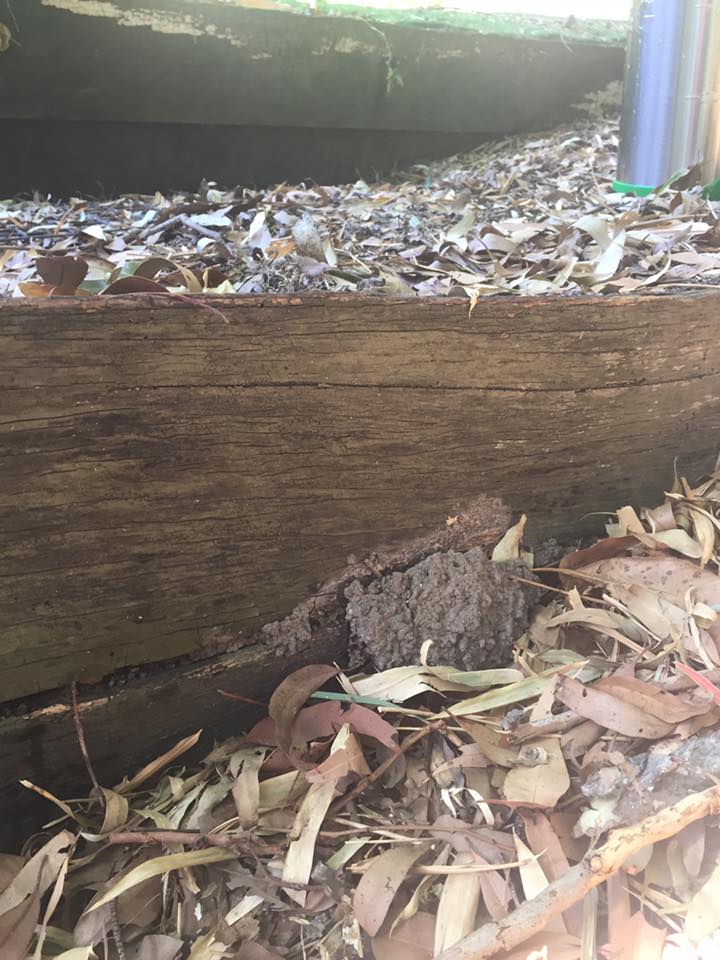
- Mud packed into gaps where timber meets a stump, pier, or the ground.
- Doors or windows sticking more than they used to, especially after wet weather.
Who this is for
Long-term owners of older Bilambil homes, buyers considering a renovation project, and landlords managing a rental on a rural-residential block. If you're planning to open up walls or replace stumps, get the inspection done first — existing activity is easier to identify before the work disturbs it. More on how I work is on the About Shannon page.
FAQs about termite service in Bilambil
Is a weatherboard home more at risk than a brick one in Bilambil?
Not automatically more at risk, but the failure looks different. Brick veneer hides subfloor timber behind a skin of brick, while an older weatherboard home has more exposed timber and often stump construction, so damage tends to show up sooner if you know where to look.
What is ant capping and does my Bilambil home have it?
Ant caps are the metal plates fitted to the top of stumps or piers on older homes, designed to stop termites climbing straight up into the floor frame undetected. A lot of older Bilambil homes have them, but caps get damaged, painted over, or bridged by later renovations, so I check every one rather than assuming they're doing their job.
Do you visit Bilambil and Bilambil Heights on the same trip?
Often, yes, since they're only a short drive apart, but I book and report on them separately because the housing stock and risk factors are genuinely different between the creek valley and the ridge estates above it.
Does flooding on Bilambil Creek affect termite risk?
Indirectly. It's less about the creek itself reaching a property and more about how long the ground around low-lying homes stays saturated afterwards, which is exactly the kind of prolonged dampness termites are drawn to.
I'm renovating an older Bilambil home — should I get an inspection first?
Yes, ideally before you open up walls or replace stumps. Existing termite activity is often easier to identify before renovation work disturbs it, and it avoids the risk of sealing a problem behind new linings.
Related local termite resources
Book a Bilambil inspection
Call 0405 508 035 and let me know if you're in the valley village or up in the Heights — the address alone doesn't always make it obvious, and it changes what I bring with me.