
Elevated Ground, Different Rules
Termite Inspections in Farrants Hill
Farrants Hill looks down over the cane fields and the Tweed Valley, and that elevation genuinely changes how I approach an inspection here. I'm Shannon Kitchener of Local Pest Co, and on a sloped block the questions I ask first are about where water goes, not just where it's sitting today.
A hillside changes the risk, it doesn't remove it
Farrants Hill sits up above Murwillumbah and Condong, and the outlook is one of the best in the valley. But elevation is a mixed blessing when it comes to termites. Sloped ground sheds surface water faster than the flats below, which helps in some ways — less standing water, generally better drying after rain. What it doesn't do is remove moisture from the equation entirely; it just moves where that moisture ends up.
On a hillside block, run-off tends to concentrate rather than disperse: at the base of cut batters, behind retaining walls, and on the downhill side of a house where the ground levels back out. Add in dense subtropical vegetation, which is common on these blocks and slows down how quickly the ground dries in shaded areas, and you get pockets of sustained moisture in specific, predictable spots — which is exactly where I look first.
Reading the slope before I check the house
Before I get near the walls, I map the site: where the high side and low side of the block are, where cut meets fill, and where a retaining wall or garden terrace is doing double duty as a dam for run-off it was never designed to hold back permanently.
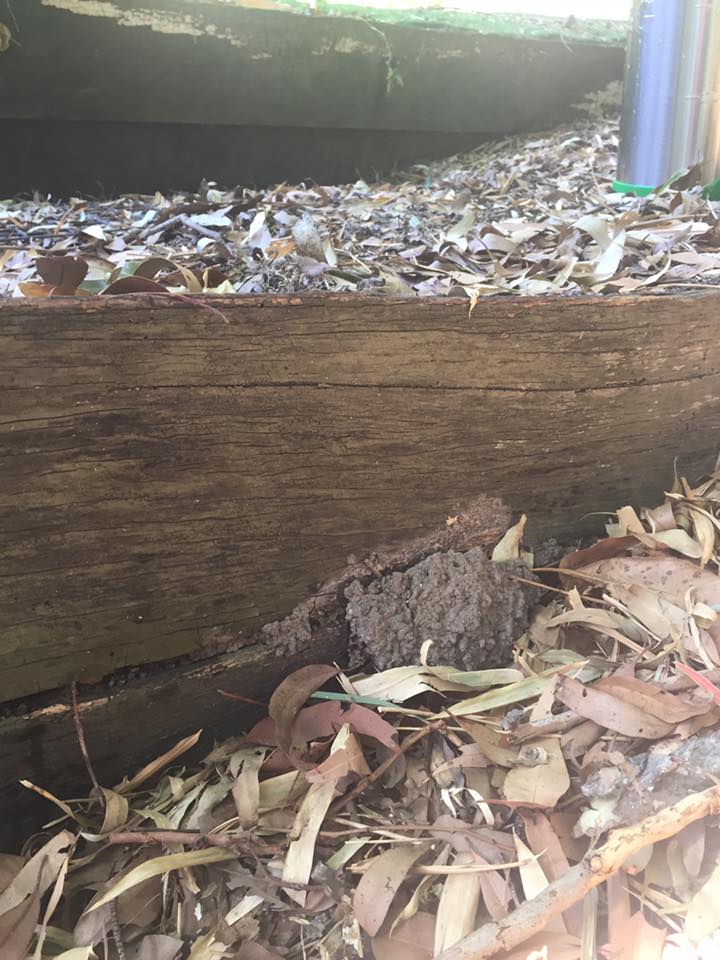
Timber retaining walls get particular attention. They sit in constant contact with damp soil on one face, and if there's a structure or the house itself nearby, activity in the wall can be a preview of what's heading toward the building next.
Treatment and prevention on sloped ground
An active infestation gets the same response on a hill as anywhere else — stop it first, then plan long-term management; see termite removal vs treatment for how I explain the options. Prevention here leans on managing run-off deliberately: keeping cut batters and retaining walls draining as intended, pulling dense vegetation back from the downhill side of the house, and checking older rural sheds and outbuildings that often sit on the flatter pad below the main dwelling. Ask about low-chemical options if you'd prefer to limit chemical use around gardens or a water tank.
Signs worth a call
- Timber retaining walls or terracing that feel soft, crumbly, or hollow when tapped.
- Mud shelter tubes on the downhill side of stumps, piers, or garden walls.
- Persistent damp patches at the base of cut batters that don't dry out between rain events.
- Sticking doors, or gaps opening up around window frames, particularly on the low side of the house.
Who this is for
Owners of hillside acreage and rural homes around Farrants Hill, especially where retaining walls, terraced gardens, or older sheds sit downhill from the main house. It's also worth a call before any landscaping or retaining work, since regrading a slope changes where water goes next. More on how I work is on the About Shannon page.
FAQs about termite service in Farrants Hill
Does being up on a hill mean lower termite risk than the valley floor?
Lower in some ways, but not in every way. Farrants Hill blocks generally shed surface water faster than flat river-flat land, which helps, but that same run-off has to go somewhere, and it's common for it to concentrate around retaining walls, cut batters or the downhill side of a house rather than disappearing entirely.
Do retaining walls need to be part of the inspection?
Yes, particularly timber ones. A timber retaining wall holding back a cut slope is in constant contact with damp soil on one side, and if it's anywhere near the house I want to know whether it's carrying any activity before it becomes the home's problem too.
We've got dense bush right up against the house — should we clear it back?
Some clearance helps. It's less about the plants themselves and more about what dense, shaded vegetation does to airflow and drying time around the base of the walls — a gap of even half a metre makes a real difference to how quickly that area dries out after rain.
Does the elevation and view change how you actually inspect the property?
It changes where I look first, yes. On a sloped Farrants Hill block I'm mapping the site before I start on the house — where the high side and low side are, where cut and fill meet the structure, and where water is likely to be concentrating that you wouldn't necessarily notice day to day.
How often do you get out to Farrants Hill?
Regularly — it's close to Murwillumbah and Condong, both part of my usual run, so I can generally offer a booking without a long wait.
Related local termite resources

Book a Farrants Hill inspection
Call 0405 508 035 and let me know if your block has retaining walls or terracing — it helps me plan the visit before I arrive.
Local, owner-operated, and comfortable working a slope, not just a flat pad.